Wildlife holidays in India are often planned around safari slots. Travellers compare gate distances, jeep availability and room rates, then fill the hours between drives with whatever the hotel happens to offer. The rest of the stay becomes an afterthought. Yet the landscape a guest has come to see does not stop at the park boundary. Its seasons, its food, its people and its quiet hours hold as much meaning as any sighting from a jeep. The Postcard Hotel, a collection of intimate luxury hotels across India, is built on the idea that a stay should deepen the destination, not simply provide access to it.
Choose a wildlife stay that helps you understand the landscape, not only reach the park gate. Look for an intimate hotel with knowledgeable hosts, regional food, unhurried time between safaris and respect for the forest's rules, so that any sighting becomes part of a deeper sense of the place. A few hours in a jeep are a small part of the trip. The stay that surrounds those hours is what shapes the memory.
TL;DR - Summary
- Why look beyond safari access? - Drives are short and timed by the forest department. Much of a wildlife landscape is understood outside the jeep, through regional food, local knowledge and the quiet hours between safaris.
- What deepens a wildlife stay? - Hosts who know the region, time to rest between drives, the destination's own cuisine and a setting that belongs to the same landscape as the sanctuary it sits beside.
- Where does The Postcard Hotel fit? - The Postcard Gir Wildlife Sanctuary offers fifteen rooms near Gir in Gujarat. The Postcard in the Durrung Tea Estate offers twelve rooms on 1,400 acres in Assam, with Assamese dishes such as fish tanga and bamboo shoot curry.
- How to plan responsibly? - Book safari permits only through official portals, follow forest department rules on noise and distance, never feed or bait animals, and stay at least three nights so there is time between drives.
A SAFARI ALONE IS A NARROW VIEW OF A WILDLIFE LANDSCAPE
A safari drive in most Indian parks lasts three to four hours. The forest department sets the timing, the route and the number of vehicles allowed. Guests enter at a fixed hour and leave at a fixed hour. Between the morning and afternoon drives, there are long stretches of stillness.
Those hours are not empty. They are when the landscape around the park reveals itself. The trees on the hotel grounds, the birds at dusk, the cooking in the kitchen, the way the light changes over dry thorn forest or wet tea country. A stay that fills this time with meaning is worth more than one that simply shortens the distance to the gate.
Judging a wildlife stay only by proximity or jeep access misses the point. The park is governed by rules no hotel controls. What the hotel can control is everything else: the food, the pace, the knowledge of its hosts and the character of the land it sits on.
WHAT MAKES A WILDLIFE STAY WORTH RETURNING TO
The first mark of a good wildlife stay is hosts who know the region. Not a rehearsed script about the park's star species, but a genuine familiarity with the landscape, its seasons, its trees, its local food traditions. This kind of knowledge cannot be manufactured. It comes from being rooted in the place.
The second is time. A stay of two nights with back to back safaris leaves no room for the destination to settle. Three nights or more, with at least one day free of drives, allows a guest to notice the smaller things: the sound of the forest at midday, the shift in birdsong between morning and evening, the taste of a regional dish that would not appear on a menu anywhere else.
The third is food. Regional cuisine is one of the clearest expressions of a landscape. What grows locally, what is cooked traditionally, what the season allows. A wildlife stay that serves its own region's food connects the guest to the place in a way that a generic international menu cannot.
The fourth is setting. An intimate hotel that sits within the same landscape as the sanctuary, rather than apart from it, extends the experience beyond the jeep. The land around the hotel becomes part of the stay, not a gap between drives.
WILDLIFE LANDSCAPES IN INDIA WORTH UNDERSTANDING
India's wildlife sanctuaries are managed by state forest departments, each with its own rules, seasons and booking systems. Two landscapes stand out for the depth they offer beyond the safari itself.
GIR, GUJARAT
Gir National Park and Wildlife Sanctuary in Gujarat is the sole surviving natural habitat of the Asiatic lion. The Gujarat Forest Department manages the park and its conservation programmes, including the Gir Lion Conservation Project. The park's dry deciduous thorn forest supports a range of species beyond the Asiatic lion. Gir is closed from 16 June to 15 October each year during the monsoon season, as noted by the Gujarat Forest Department. Safaris are operational from 15 October to 14 June and are bookable only through the government portal operated by the forest department.
KAZIRANGA, ASSAM
Kaziranga National Park in Assam was declared a UNESCO World Heritage Site in 1985. It is home to the world's largest population of great one-horned rhinoceroses and is regarded by UNESCO as one of the finest wildlife refuges in the world. The park sits on the flood plains of the Brahmaputra River, and its landscape of elephant grass meadows, swampy lagoons and dense forest is shaped by seasonal river fluctuations. Kaziranga was declared a tiger reserve in 2007.
THE POSTCARD HOTEL IN INDIA'S WILDLIFE LANDSCAPES
THE POSTCARD GIR WILDLIFE SANCTUARY
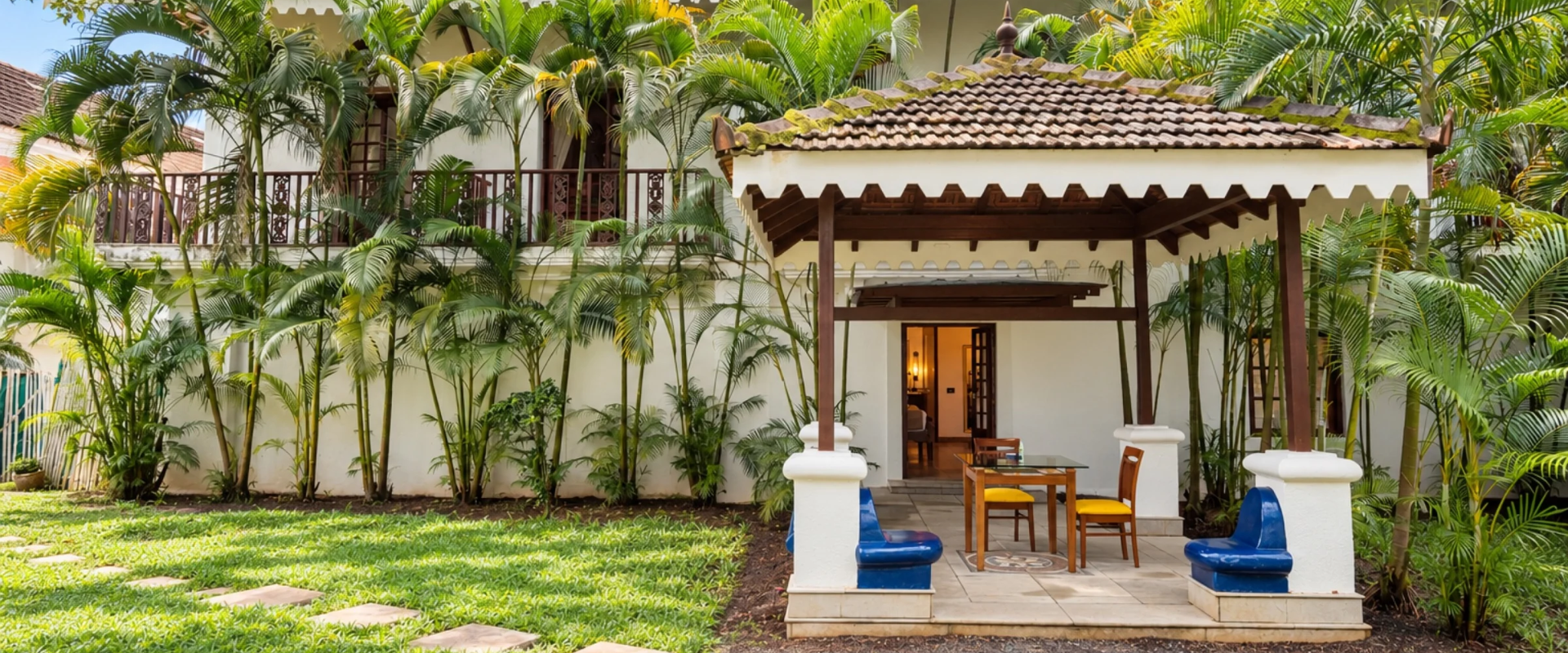
The Postcard Gir Wildlife Sanctuary has fifteen rooms on sixteen acres of mango orchards near one of India's most significant protected forests. The hotel serves Gujarati and Parsi cooking drawn from the region's own food traditions. Safaris at Gir are operated by the forest department and are bookable only through the official government portal, on a first come first served basis. The hotel does not promise sightings of any particular animal. The value of the stay is proximity to the sanctuary and the quiet that surrounds it.
THE POSTCARD IN THE DURRUNG TEA ESTATE, TEZPUR, ASSAM
The Postcard in the Durrung Tea Estate has twelve rooms set within 1,400 acres of working tea gardens in Tezpur, Assam. The hotel serves Assamese dishes such as fish tanga and bamboo shoot curry, rooted in the cooking traditions of the region. Each room preserves the original spirit of the estate, connecting guests to the early origins of the tea trade in India. The setting is a quiet base in Assam's landscape, where the rhythm of the plantation and the surrounding countryside shape the stay.
WATCHING WILDLIFE RESPONSIBLY
Every wildlife safari in India is governed by the rules of the state forest department. These rules exist to protect the animals and the habitat. Guests should follow them without exception.
Keep distance from animals. Keep noise to a minimum inside the park. Never feed or bait wildlife. Do not leave the vehicle during a drive unless the guide permits it. Book safaris only through official channels, which in most Indian parks means the forest department's own online portal. The Gujarat Forest Department has publicly asked visitors not to take selfies with lions, a reminder that responsible behaviour is not optional.
Respecting these rules is part of understanding the landscape. A wildlife stay that encourages guests to follow them, rather than work around them, is one worth choosing.
HOW TO CHOOSE AND PLAN A WILDLIFE STAY
Check the park's season and closure months on its official site before booking anything else. Gir, for example, is closed during the monsoon from 16 June to 15 October. Kaziranga closes during its own flood season. Planning around these dates is essential.
Book safari permits early through the official portal. Permits are limited and released on a schedule set by the forest department. Waiting until arrival often means missing a drive.
Stay at least three nights. This gives time for two or three safaris and, just as importantly, time between them. One day without a drive allows the destination to reveal itself at its own pace.
Ask the hotel who on its team can explain the landscape. A host who knows the region's trees, birds and seasons adds a layer of understanding that no guidebook can replace.
Keep one day free of safaris entirely. Walk the hotel grounds. Sit with a cup of tea. Eat the regional food slowly. Let the place do its work.
A wildlife stay is not only about what happens inside the park. It is about what the stay adds around the safari, the food, the setting, the pace and the knowledge of the people who host you. The best wildlife stays in India are the ones that help a guest understand the landscape, not simply pass through it.
Stay at The Postcard Gir Wildlife Sanctuary, The Postcard in the Durrung Tea Estate, explore The Postcard Hotel, or book your escape.