A classic India itinerary tries to cover six or seven cities in under two weeks. The Golden Triangle, a beach stop, a wildlife park, a hill station. On paper, it reads like range. In practice, much of it is spent in airports, on transfer roads, and recovering from early departures. The Postcard Hotel, a collection of intimate luxury hotels across India and beyond, offers a different framework: fewer places, longer stays, and each stop chosen for its season.
A slow luxury journey through India works best when planned around two or three bases rather than six cities. Stay at least three nights in each place. Match every stop to its strongest season. Choose intimate hotels where time on the property is part of the experience, not filler between excursions. Keep road transfers short and fly into the nearest airport for each base.
TL;DR - Summary
- What is slow luxury travel? - It means building a journey around fewer bases, longer stays, and seasonal timing rather than covering as many destinations as possible. The goal is depth over distance, with each stop chosen for its best months and each hotel treated as a destination in itself.
- How many stops in two weeks? - Two or three bases, each with a minimum of three nights. This leaves time for rest days, unplanned mornings, and genuine contact with a place, rather than spending half the trip in transit.
- Why does season matter so much? - India spans multiple climate zones. A beach that is perfect in November can be unpleasant in May. Matching each base to its season means better weather, fewer crowds, and a more comfortable stay.
- Where does The Postcard Hotel fit? - The Postcard Hotel collection includes intimate properties in Ladakh, Bhutan, Assam, and coastal Karnataka, each shaped by its location. With anytime check in and check out (subject to availability, confirmed at booking, at no additional charge), the pace of the stay adjusts to the guest.
RUSHED ITINERARIES COST MORE THAN THEY SEEM
India is vast. A flight from Delhi to Leh takes about 90 minutes. A flight from Guwahati to Mangalore requires a connection and most of a day. Between each flight, there is a road transfer to the hotel, often 30 to 90 minutes depending on the region. Each change of base typically absorbs a half day or more.
Over a two week trip with five or six stops, that pattern repeats enough to consume three or four full days of the holiday. Those are days spent in departure lounges, on highways, and adjusting to a new room. The financial cost is visible in flight tickets and car hire. The invisible cost is fatigue, fragmented attention, and the feeling of never quite settling in.
A slow luxury journey reverses this arithmetic. Fewer transfers mean more hours in the place itself. The savings are not only in money but in the quality of what remains.
THE PRINCIPLES OF A SLOW LUXURY JOURNEY
The framework is straightforward. Start with fewer bases. Two is often enough for a ten day trip; three works for two weeks. Each base gets a minimum of three nights, and four is better where the setting rewards it.
Season comes first. Choose the region that is at its best during the travel dates, not the other way around. Transfers should be kept short by flying into the nearest airport for each base and selecting hotels within reasonable road distance of that airport.
Build in unplanned time. At least one day at each stop should have nothing scheduled. This is where slow travel separates from a conventional luxury itinerary. The morning is open. The hotel itself becomes the experience: a private patio, a regional meal, a walk on the property. Intimate hotels with fewer rooms tend to support this rhythm naturally, because the setting and the food are designed to hold attention without a packed programme.
CHOOSING PLACES BY SEASON
India's size means that at any point in the year, at least one region is in its best window. According to regional travel guidance, Ladakh in the far north is most accessible between June and September. The coastal south, including Karnataka and Goa, is best from October to March, as noted by Karnataka and Goa state tourism guidance. The northeast, including Assam, is strongest from October to April, when rainfall subsides and the landscape stays green.
Bhutan, which sits adjacent to India's northeast, shares a similar autumn and spring window. Planning a slow journey means selecting the region that aligns with the calendar, then choosing the hotel within it. Trying to combine a mountain base and a coastal base in the same trip is possible only when both regions overlap in season, which limits the realistic combinations.
THE MOUNTAINS: LEH AND THIMPHU
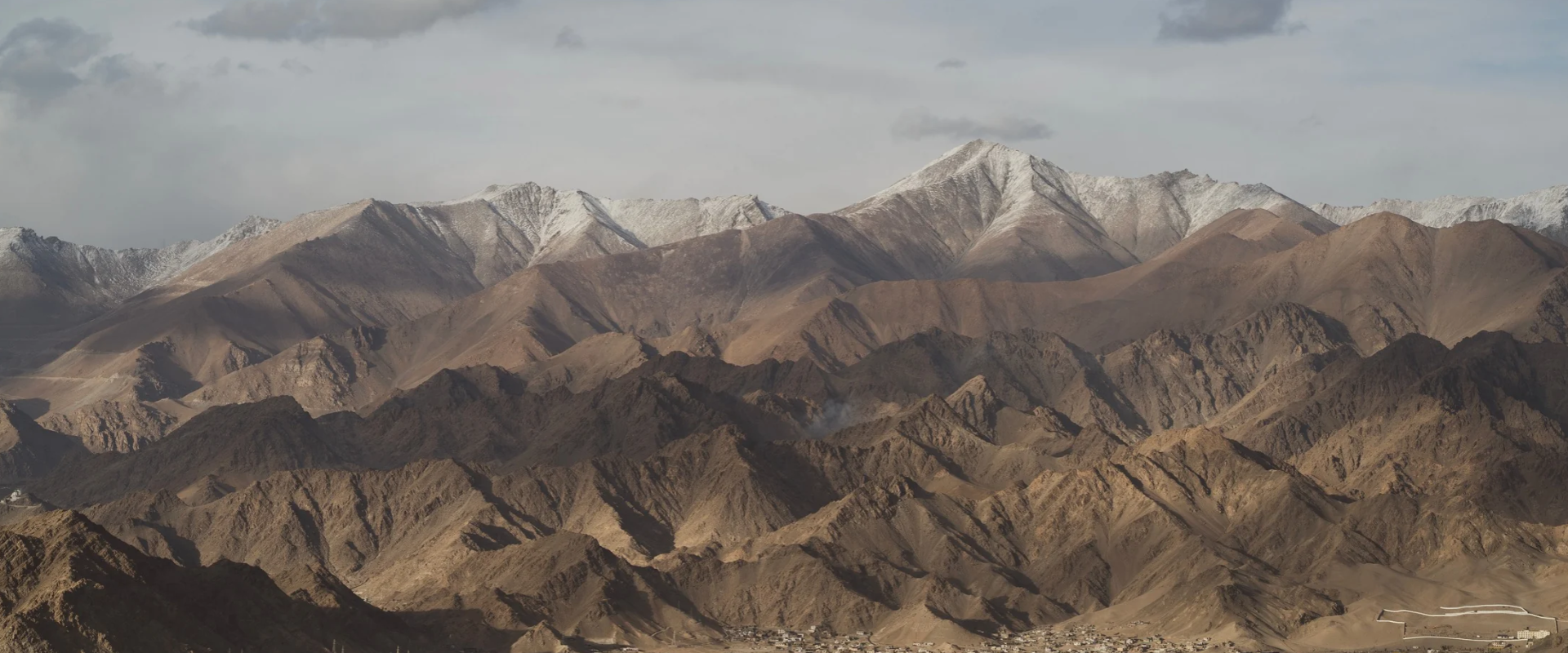
The Postcard in the Himalayan Willows sits in Stok, Leh, about 15.6 km (roughly 31 minutes) from Leh airport. Floor to ceiling windows in each room open onto views of the Stok Ridge. A sun parlour in every room makes the acclimatisation period feel less like waiting and more like arriving.
That acclimatisation is not optional. The Ladakh Tourism advisory on tourism.ladakh.gov.in states that all tourists arriving in Leh must undergo at least 48 hours of complete rest before travelling to higher altitude areas. The advisory recommends no active physical exertion on the first two days. This makes Leh a natural slow stop by design. A three or four night stay here is not indulgence; it is the medically advised minimum before the body adjusts.
The Postcard Dewa, Thimphu, Bhutan is about 35.3 km (roughly 40 minutes) from Paro International Airport, in the Khasadrapchu valley by the Wang Chhu river. The hotel has 13 rooms and two suites, all set against mountain views. Temple hikes to nearby Nyenzerkha Lhakhang and riverside picnic baskets give shape to unhurried days. Bhutan is not part of India, but it connects naturally to a mountain journey for travellers entering through Paro. These two mountain bases work as separate journeys by region, not as a single combined route.
TEA COUNTRY AND THE COAST: ASSAM AND KARNATAKA
The Postcard in the Durrung Tea Estate sits on 1,400 acres near Tezpur, Assam. Twelve rooms are spread across the Planters' Bungalow and Luxury Chalets, each with a private patio looking onto working tea gardens. The kitchen serves Assamese dishes such as fish tanga and bamboo shoot curry. A stay here is shaped by the rhythm of the estate: morning light over the tea rows, afternoon quiet, and regional food that belongs to the land around it.
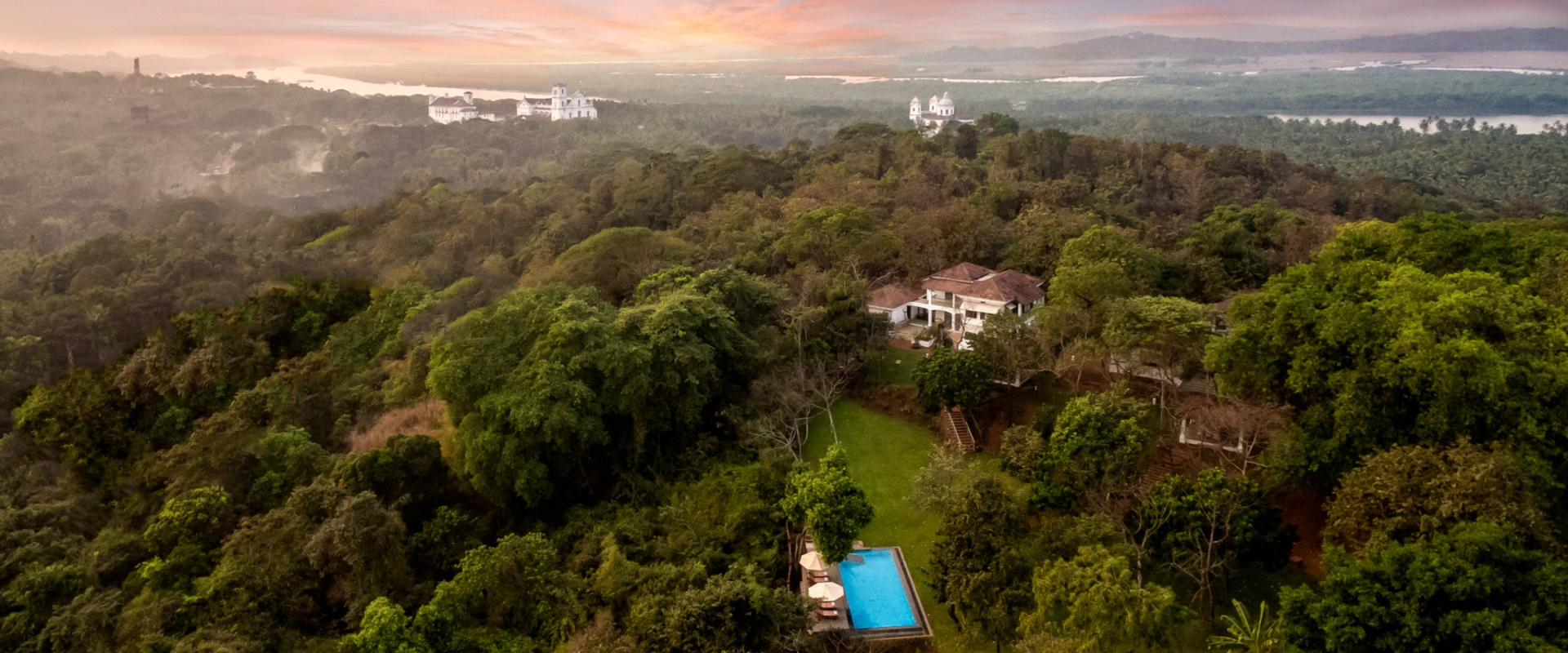
The Postcard on the Arabian Sea, Karnataka, has nine rooms, all facing the ocean, about 120 km (roughly 1.5 hours) from Mangalore airport. The cooking draws from the coastal communities of the region: Bunt, Goud Saraswat, Catholic, and Konkani Muslim traditions, including ghee roasts and Kundapur chicken curry. These two properties sit in different parts of the country and different seasonal windows. They are best treated as separate bases for separate journeys, not combined in a single two week trip unless the season and transfer logistics align.
HOW TO PLAN THE JOURNEY
Start with dates and season. Check which regions are in their best months during the planned travel window, using official state tourism sources for each region. Pick two or three bases within those regions.
Fly into the nearest airport for each base. Keep road transfers short, ideally under 90 minutes. Allow a rest day after any long travel day and always after arriving at altitude. In Leh, this rest period is a mandatory 48 hours as advised by Ladakh Tourism.
Book anytime check in where available. Across The Postcard Hotel collection, anytime check in and check out is subject to availability, confirmed at booking and at no additional charge. This flexibility matters on a slow journey, where arrival times vary and the first hours at a new base set the tone for the stay.
Do not try to connect distant regions in a single trip unless a realistic flight route exists between them. A journey that combines Assam and coastal Karnataka, for example, requires a connection through a major hub and most of a travel day. If the transfer cost in time is too high, treat them as two separate journeys in two different seasons.
The test of a good slow itinerary is simple: count the nights spent in a place versus the days spent getting there. If the ratio favours the place, the plan is working.
A slow luxury journey through India does not require seeing less. It requires choosing well, staying longer, and letting each place do what it does best in its own season. Stay at The Postcard in the Himalayan Willows, The Postcard Dewa, The Postcard in the Durrung Tea Estate or The Postcard on the Arabian Sea, explore The Postcard Hotel collection, or book your escape.