For many people in northern India, the first number checked on a November morning is no longer the temperature. It is the AQI. That number decides whether the children play outside, whether the morning walk happens and whether the windows stay shut for another day.
The surest escape is to leave the northern plains altogether. While Delhi's air sits in the "very poor" range, Ladakh, Bhutan, India's north-east and the Karnataka coast stay clear, because each lies outside the conditions that trap winter smoke over the plains: high above them, well beyond them, or open to the sea wind.
Most winter breaks are planned for late December, around school holidays and the new year. November makes the stronger case. The cities are at their haziest, and several of the clearest places within reach are at their best.
DELHI'S AQI AND THE WINTER LID OVER THE NORTHERN PLAINS
On 3 November 2026, Delhi recorded its worst air in 287 days, with the AQI settling at 350, a day after the city was moved to Stage II of the Graded Response Action Plan. Diwali pushed it further. The Central Pollution Control Board's 24-hour average for 8 November was 376, and after the festival, private monitors such as IQAir showed readings above 1,000 in parts of the city, including Shahdara and Defence Colony. India's official index stops at 500, so the two numbers are not directly comparable, but both describe the same air.
The season does the rest. As Down To Earth has explained, a temperature inversion holds pollution close to the ground, calm winds stop it from dispersing, and the Indo-Gangetic plain, landlocked and walled to the north by the Himalaya, gives it nowhere to go.
That same geography points the way out. The places with the clearest winter air are the ones that escape those conditions: high above the plains in Ladakh and Bhutan, beyond them in the north-east, or on a coast where the wind comes off the sea.
LADAKH: CLEAR AIR HIGH ABOVE THE PLAINS
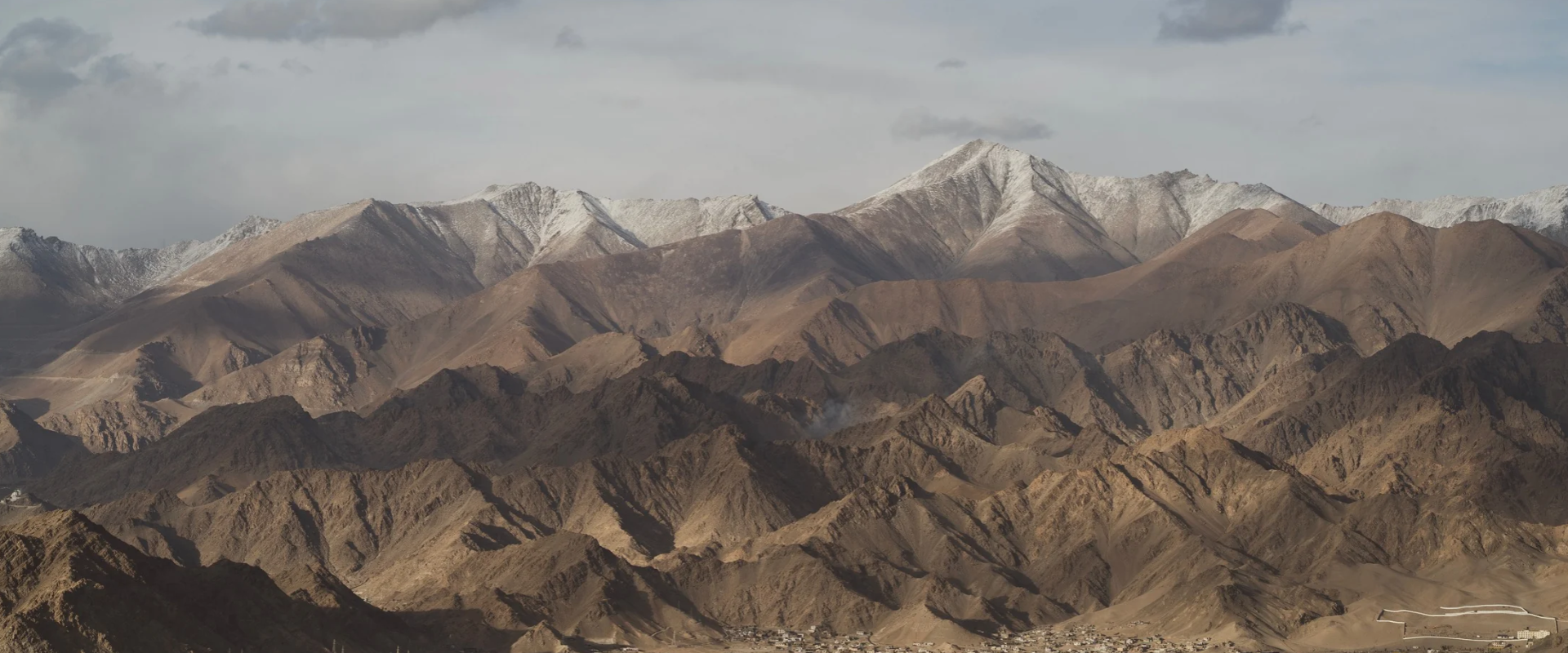
Few contrasts in India are as sharp as leaving a smoggy northern morning and landing in Leh. The sky turns a deep, uncomplicated blue, the mountains have edges again, and the far side of the Indus Valley seems close enough to touch. The Ladakh administration has noted the region's relatively better air quality compared with other parts of the country.
November is a quiet month here. The summer visitors have gone, the valley has settled into the ochre and grey of early winter, and the monasteries at Hemis, Thiksey and Shey can be visited without the crowds. In the village of Stok, about half an hour from Leh airport, The Postcard in the Himalayan Willows looks onto the Stok Ridge through floor-to-ceiling windows. Each room has a sun parlour for sitting out the cold in full sun, and traditional Ladakhi bukharis keep the rooms warm whatever the temperature outside.
Clean air does not change the altitude. Ladakh's tourism department advises at least 48 hours to acclimatise, with complete rest and no sightseeing on the first day. An early flight is best followed by sleep, which is where anytime check-in earns its place: subject to availability, confirmed at booking and at no additional charge.
BHUTAN, WHERE THE CONSTITUTION PROTECTS THE FOREST
Bhutan has written its forests into law. Its constitution requires that at least 60 per cent of the country remain under forest cover for all time, and the Convention on Biological Diversity records forest cover of up to 70.46 per cent.
Autumn is when the country is at its clearest. Lonely Planet notes that the season brings clearer Himalayan panoramas than spring, with mild days. On the edge of the capital, The Postcard Dewa, Thimphu looks over the Khasadrapchu valley and the Wang Chhu river, about 40 minutes from Paro International Airport. It has 13 rooms and two suites, and the days here are meant for being outside: a hike to a Buddhist temple, the markets and sacred sites of Thimphu, or a picnic basket packed for the riverbank.
THE NORTH-EAST AND THE TEA COUNTRY OF ASSAM
The cleanest air of any monitored Indian city last November was in the north-east. In its November 2025 air quality snapshot, the Centre for Research on Energy and Clean Air ranked Shillong first, with average PM2.5 of 7 µg/m³, and Gangtok second. The region offers a softer kind of clarity than Ladakh: green rather than stark.
Near Tezpur, The Postcard in the Durrung Tea Estate sits within 1,400 acres of working tea plantation. Its twelve rooms, across the Planters' Bungalow and the Luxury Chalets, open onto private patios over the tea, and the day takes its pace from the estate: the plantation workers moving through the rows, endless cups of tea, and an Assamese table of fish tenga and bamboo shoot curry. For a family that has spent weeks indoors, the case here is space as much as air.
THE KARNATAKA COAST, WHERE THE SEA WIND CLEARS THE AIR
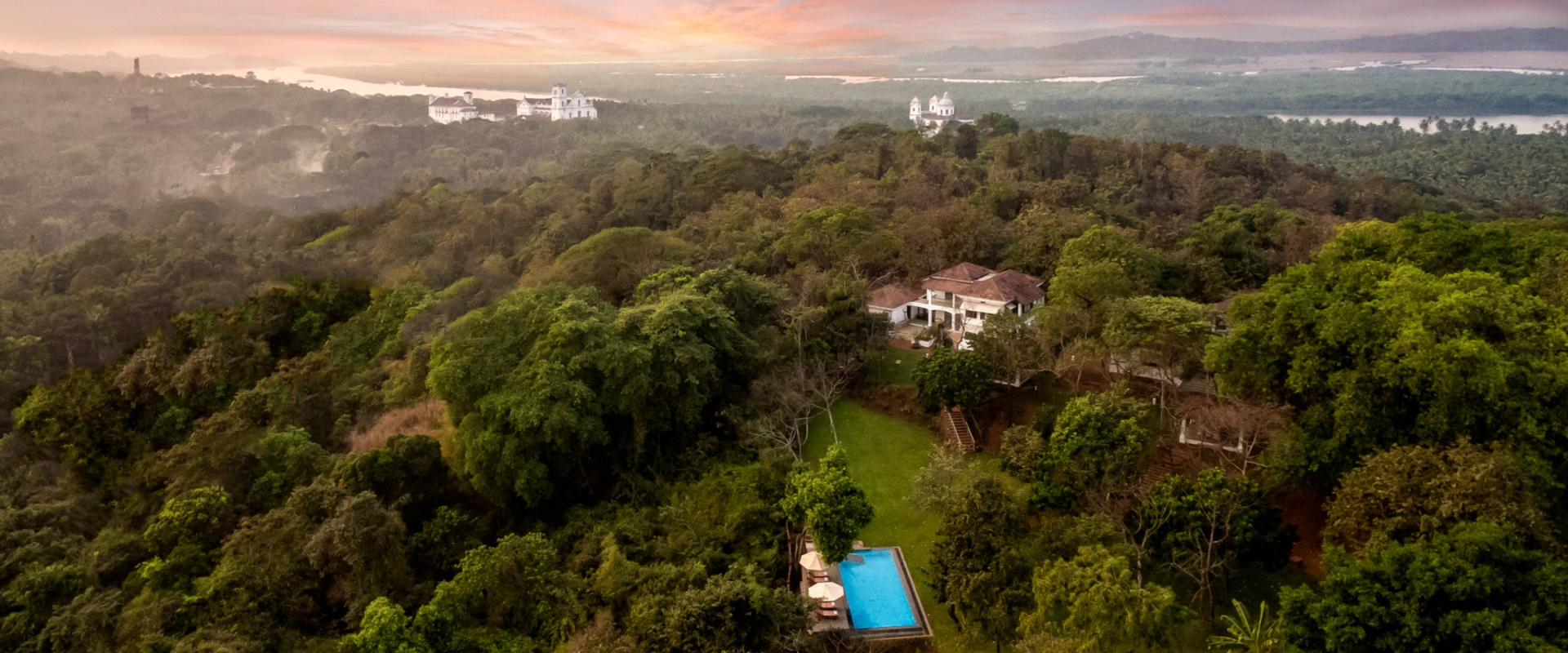
The south has a natural advantage in winter. Coastal breezes help disperse pollution, as Down To Earth has noted of southern cities, and the same CREA snapshot found that six of India's ten cleanest cities last November were in Karnataka, including Shivamogga and Mysuru.
At Maravanthe, Karnataka Tourism describes a highway running between the Arabian Sea and the Souparnika River. The Postcard on the Arabian Sea has nine rooms, all facing the ocean, with patios for watching the sunset. Its kitchen cooks from the coast's Bunt, Goud Saraswat, Catholic and Konkani Muslim traditions, from ghee roasts to Kundapur chicken curry, and the days are spent outdoors: dolphin spotting, the temple at Murudeshwara or the trail at Agumbe. Mangalore International Airport is about an hour and a half away.
PLANNING A CLEAN-AIR BREAK
Check the air at the destination as well as at home. Not every town has a monitoring station, and the CREA snapshot lists several state capitals without an operational one, so the nearest city's reading is often the best guide available.
Build in time for altitude. In Leh, the first day is for rest, and sightseeing is best left until the third.
Stay long enough to feel the difference. Three or four nights is a sensible minimum; a weekend spent mostly in transit rarely feels like a break.
A holiday does not fix a city's air, and it is no substitute for medical advice for anyone with a respiratory condition. What a few clear days give back is ordinary and easily missed: a long walk, breakfast outdoors, a child running across a lawn, a window left open overnight.
The air in the cities will improve, as it does each year. Until then, the simplest answer is to go where it is already clear.
Stay at The Postcard in the Himalayan Willows, The Postcard Dewa, Thimphu, The Postcard in the Durrung Tea Estate or The Postcard on the Arabian Sea, explore The Postcard Hotel collection, or book your escape.