Planning a wildlife holiday in India means choosing where to stay, and the labels attached to accommodation can be confusing. Properties near national parks and sanctuaries call themselves wildlife resorts, jungle lodges, forest stays, or simply hotels. The terms overlap, and no official body in India draws a line between them. What matters is not the name on the signboard but what the stay actually offers.
India has no formal classification that separates a wildlife resort from a jungle lodge. In general use, "resort" tends to describe a larger property with more facilities on site, while "lodge" tends to suggest a smaller, simpler stay that feels closer to the forest. These are tendencies, not rules. Either type can be comfortable, well run, and close to the park. Travellers do better to judge a wildlife stay by its setting, scale, access, food and hosting than by its label.
DISTANCE AND ACCESS TO THE PARK
The single most practical question is how far the property sits from the park or sanctuary gate. A shorter distance means less time on the road before and after each safari drive, which matters when drives begin early in the morning. Properties within a few kilometres of the gate also make it easier to return for a second drive in the afternoon without the day feeling rushed.
Some stays sit inside buffer zones or on the edge of forest corridors, which can mean wildlife activity around the property itself. Others are set back in a nearby town. Neither arrangement is wrong, but the difference shapes the experience considerably.
SCALE AND NUMBER OF ROOMS
A property with fewer rooms generally means quieter surroundings, less vehicle movement, and a more personal style of hosting. Larger properties may offer a wider range of facilities. The right choice depends on what a traveller values. For wildlife stays specifically, a smaller scale often suits the pace of the forest better, because the day revolves around the park's rhythm rather than the property's programme.
The Postcard Gir Wildlife Sanctuary in Gujarat, for example, has 15 rooms. It is a hotel near Gir, not a resort or a lodge, and its small scale means the property stays quiet between drives.
HOW SAFARIS AND PERMITS WORK
Safari permits in Indian national parks and sanctuaries are regulated by the relevant state forest department. Permits are limited in number, allocated by zone, and must be booked in advance through the department's official portal. Availability varies by season and by park. Travellers should check the forest department's website for the specific sanctuary they plan to visit, as rules on vehicle type, group size and timings differ from state to state.
No hotel or lodge can guarantee a safari permit. Where a property assists with bookings, those arrangements remain subject to availability and forest department regulations.
FOOD AND HOSTING BETWEEN SAFARIS
Most of a wildlife stay is spent between drives. The quality of food, the comfort of the room, and the character of the hosting during those hours shape the experience as much as the safari itself. Regional cooking is worth seeking out. A property that serves the food of its landscape connects the stay to the place in a way that a generic menu cannot.
At The Postcard Gir Wildlife Sanctuary, the kitchen draws on Gujarati and Parsi cooking traditions, with pomfret from Veraval when available, and ingredients from the property's own organic garden. The Postcard Hotel collection also follows an anytime breakfast policy with no cut off, which suits the irregular hours of safari mornings.
RESPECT FOR THE FOREST
A good wildlife stay keeps its footprint light. That means controlled lighting at night so as not to disturb nocturnal species, low noise levels across the property, and strict adherence to park rules during drives. These are not luxuries; they are basic courtesies to the forest and its inhabitants. Travellers should look for properties that treat the surrounding landscape as something to protect, not merely as a backdrop.
THE TIME BETWEEN DRIVES
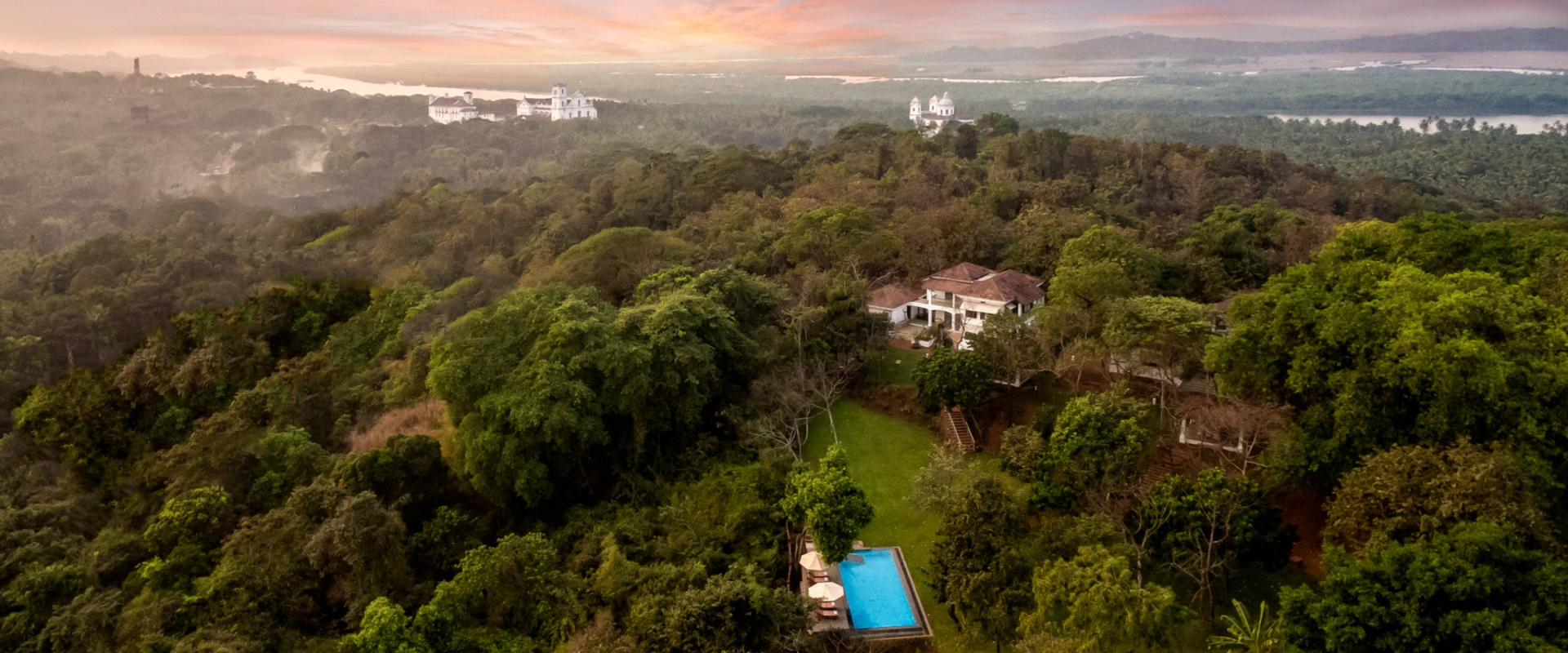
Safari drives typically occupy a few hours in the morning and a few in the afternoon. The rest of the day is open. How a property fills that time, or leaves it unfilled, matters. Some travellers want guided nature walks, birdwatching, or talks on local ecology. Others want a quiet verandah and a good book. The Postcard Hideaway, Netravali in South Goa, with twenty rooms on 20 acres in the Western Ghats, offers forest walks and waterfalls as part of the landscape rather than as a scheduled programme.
Anytime check in and check out, subject to availability, confirmed at booking, at no additional charge, can also help travellers align their arrival and departure with safari timings rather than with a fixed hotel clock.
The strongest wildlife stays in India share a few qualities regardless of what they call themselves. They sit close to a protected area. They keep their scale small. They plan the day around the park's rhythm. They serve the food of the region. And they treat the forest with care. Look for those things, and the label on the gate will not matter much.