On many hotel holidays, the first decision of the day is not made by the guest. It is made by the breakfast cut off. A sign in the lobby or a note on the bedside card announces that the buffet closes at 10:30, and the morning quietly rearranges itself around that fact. The alarm is set. The conversation about whether to sleep in or eat well is settled before it begins. The kitchen's schedule becomes the guest's schedule, and the holiday loses something before it has properly started.
The Postcard Hotel sees this differently. A fixed buffet window turns a holiday morning into an appointment. Leisure, by definition, means the guest decides when the day starts. A hotel built for leisure serves breakfast at the guest's hour, cooked fresh, rather than asking guests to arrive before the trays are cleared. That distinction, between a hotel that adapts to the guest and one that asks the guest to adapt, is the subject of this piece.
TL;DR - Summary
- What does leisure actually mean? - Merriam-Webster defines leisure as "freedom provided by the cessation of activities," especially time free from work or duties. On holiday, that freedom should extend to when and how a guest eats breakfast, not just whether the pool is open.
- Why do hotels use buffet timing? - Buffets serve many guests at once with predictable staffing and food preparation. That is a reasonable operational choice, but it transfers the hotel's scheduling constraint onto the guest's morning.
- What does anytime breakfast mean? - Anytime breakfast removes the fixed window entirely. There is no opening hour and no closing hour. The meal is cooked to order when the guest is ready, rather than held on a warming tray since early morning.
- How does The Postcard Hotel handle breakfast? - The Postcard Hotel offers anytime breakfast with no cut off, freshly prepared to order. In room dining and extras vary by hotel and may cost extra. The policy reflects a broader commitment to unhurried, guest led hospitality.
LEISURE IS TIME THAT BELONGS TO THE GUEST
The word is used loosely in hospitality. Leisure pool. Leisure facilities. Leisure traveller. But the meaning is precise. Merriam-Webster defines leisure as "freedom provided by the cessation of activities," especially "time free from work or duties." That definition carries a clear implication: leisure is not a setting or a service. It is the condition of having your time returned to you.
A holiday is supposed to be the purest form of that condition. No meetings, no deadlines, no obligations that belong to someone else's calendar. Yet many hotel stays quietly introduce a new set of small obligations. Breakfast between 7 and 10. Pool towels collected by 6. Checkout by noon. Each one is minor on its own. Together, they create a schedule that the guest did not choose.
When a hotel describes itself as a leisure destination, the honest question is whether it has actually given the guest's time back, or simply replaced one set of appointments with another.
THE BUFFET CLOCK IS BUILT FOR THE KITCHEN, NOT THE GUEST
It is worth being fair about why buffets exist. A buffet breakfast is an efficient way to serve a large number of guests within a predictable window. The kitchen prepares a known quantity of food. Staffing is concentrated into a fixed shift. Waste can be estimated and managed. For a hotel with 200 rooms, this is not laziness. It is a reasonable operational response to scale.
The cost, however, is borne by the guest. A fixed window means the guest must be present during that window or miss the meal entirely. For a family where one child wakes early and one parent sleeps late, the buffet forces a negotiation. For a couple on a restorative holiday, the 10:30 cut off becomes a quiet alarm. The guest is not choosing when to eat. The guest is choosing whether to comply.
There is also the question of freshness. A buffet that opens at 7 and closes at 10:30 has food that was prepared before 7. A guest arriving at 10 is eating from trays that have been sitting for three hours. The variety may be wide, but the meal is not cooked for that guest, at that moment.
WHAT THE BUFFET CLOCK COSTS A HOLIDAY
The real cost is not a missed omelette. It is the loss of the morning itself. A holiday morning, unscheduled, is one of the most restorative parts of travel. The guest wakes without an alarm. There is no reason to check the time. The day can begin with a walk, a long bath, a slow conversation, or simply more sleep.
A buffet cut off interrupts that. It places a deadline at the start of the day, the one part of the day that should have none. Couples find themselves negotiating: do they go down now, or risk missing the spread? Families split into early risers and late sleepers, with breakfast becoming a logistical exercise rather than a shared pleasure.
The food itself carries the mark of the system. Scrambled eggs held under heat lamps. Toast arranged in rows an hour ago. Fruit sliced at dawn. None of it was made for the person eating it. It was made for the window.
GUEST LED DINING STARTS WITH THE GUEST'S CLOCK
The alternative is straightforward. Breakfast is cooked to order, at the hour the guest chooses, with no opening time and no closing time. The kitchen adapts to the guest rather than the other way around.
This approach works best at intimate hotels where the kitchen can respond to individual guests rather than managing volume. A property with fewer rooms can afford to ask each guest what they would like and when they would like it. The meal is prepared fresh. It arrives when the guest is ready, not when the schedule permits.
Guest led dining also extends to where the meal is taken. A table by the garden. A quiet corner of a courtyard. The room itself. The guest is not directed to a single dining hall at a single hour. The morning belongs to the guest, and the meal fits into it rather than defining it.
HOW THE POSTCARD HOTEL APPROACHES BREAKFAST
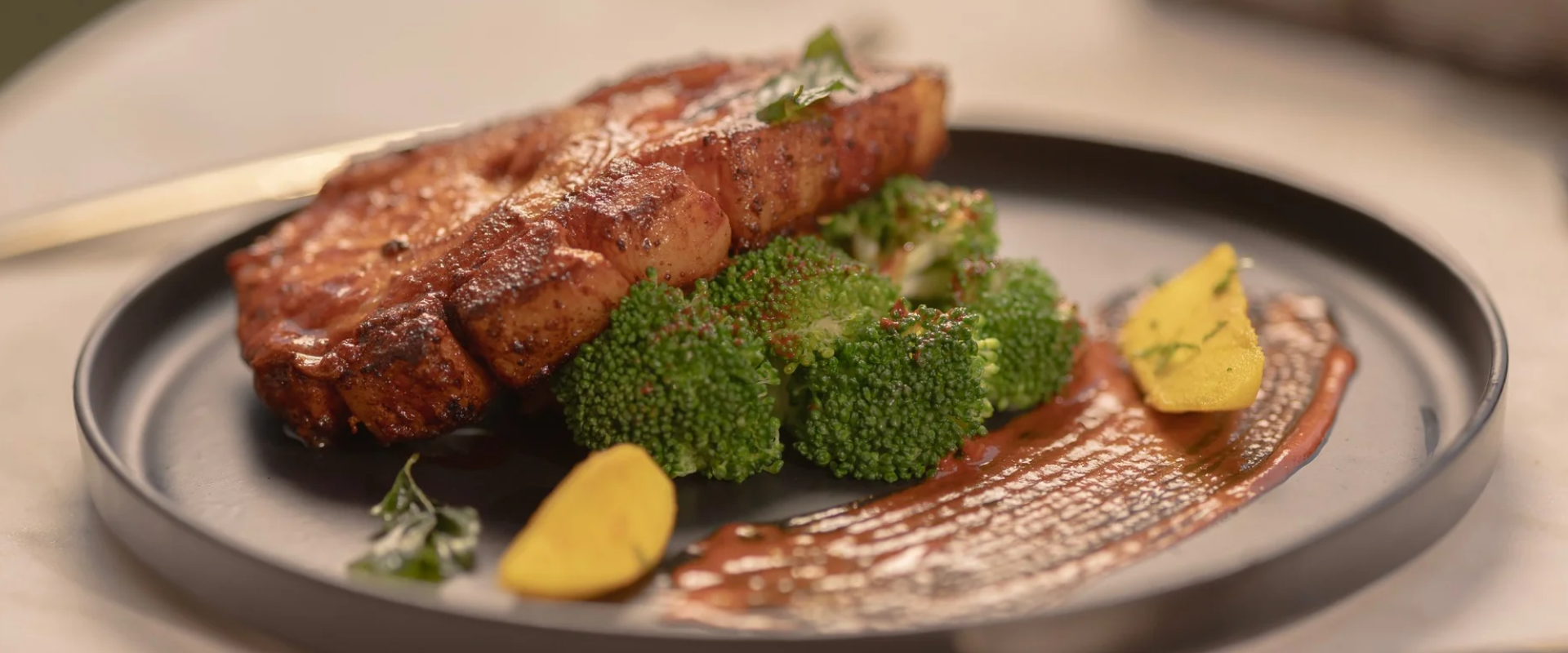
The Postcard Hotel offers anytime breakfast with no cut off, freshly prepared to order. There is no fixed window. There is no buffet line. The guest eats when the guest is ready.
In room dining and extras vary by hotel and may cost extra, but the principle is consistent across The Postcard Hotel collection: the guest's schedule comes first. This is not a workaround or an upgrade. It is the standard approach to morning meals at every property.
That policy sits within a broader philosophy. The Postcard Hotel collection is built around unhurried holidays, where time belongs to the guest. Anytime check in and check out is available, subject to availability, confirmed at booking and at no additional charge. The hotels are intimate, with room counts that rarely exceed twenty. Regional cuisine is sourced locally and cooked fresh. The design of each property responds to its destination rather than following a single template.
Anytime breakfast is not a feature bolted onto a conventional hotel model. It is one expression of a consistent idea: that a hotel designed for leisure should not impose its own clock on the guest.
WHAT TRAVELLERS SHOULD ASK BEFORE BOOKING
Breakfast policy is rarely the first thing a traveller checks when choosing a hotel. It should be closer to the top of the list, particularly for holidays where rest and flexibility matter. A few questions, asked before booking, can reveal whether a hotel's idea of leisure matches the guest's own.
Ask when breakfast is served. A hotel that answers with a window (7 to 10:30, for example) is telling the guest that the morning has a deadline. A hotel that answers with "whenever you are ready" is telling the guest something different about how it thinks about time.
Ask whether breakfast is a buffet or cooked to order. Both have their place, but on a holiday built around rest, a freshly prepared meal at the guest's chosen hour is a meaningfully different experience from a buffet line.
Ask whether breakfast can be taken in the room, on a terrace, or in the garden. Where the guest eats is part of how the morning feels. A single dining hall at a fixed hour is a different proposition from a meal served where the guest wants it.
Ask whether any timing or location carries an extra charge. Some hotels offer flexible breakfast as an upgrade or a room service surcharge. Knowing this in advance avoids a small disappointment on the first morning.
These are not demanding questions. They are practical ones. The answers will say a great deal about whether the hotel has designed its mornings around the guest or around the kitchen.
A holiday where the guest sets the rhythm of the morning is a different kind of holiday. It is quieter, less scheduled, and more personal. The breakfast question is a good place to start when deciding whether a hotel understands that difference. Stay at The Postcard Hotel, explore The Postcard Hotel collection, or book your escape.