Across India, many luxury hotel menus read the same whether the property sits on a mountain, a river or a coast. Butter chicken, dal makhani, a Caesar salad, a pasta. The location changes; the plate does not. For travellers who choose India precisely because its food differs every few hundred kilometres, a generic menu raises a quiet question: if the hotel has not learned the food of its own region, what else has it not learned? The Postcard Hotel, a collection of intimate luxury hotels across India, treats regional cuisine as evidence of something larger.
Regional cuisine signals trust because it is specific and hard to fake. When a luxury hotel cooks the dishes of its own region and names the communities behind them, guests can see the hotel has learned the place, rather than serving the same menu it would serve anywhere. That specificity is what separates a promise of authenticity from proof of it.
TL;DR - Summary
- Why does regional cuisine signal trust? - Regional dishes are specific, verifiable and tied to named communities. A guest can recognise them, ask about them and check whether the hotel has done the work of learning its own place. Generic menus offer no such proof.
- Why do many luxury menus stay generic? - Standard menus are easier to staff, source and replicate across properties. They reduce operational risk but also flatten the identity of each destination into a single, interchangeable dining experience.
- What does The Postcard Hotel do differently? - Each hotel in The Postcard Hotel collection builds its kitchen around the cooking traditions of its region. The Postcard on the Arabian Sea draws on Bunt, Goud Saraswat, Catholic and Konkani Muslim cooking. The Postcard in the Durrung Tea Estate serves Assamese dishes such as fish tanga and bamboo shoot curry.
- How can a guest judge a hotel's kitchen? - Look for named regional dishes on the menu, ask which communities the cooking comes from, ask what is in season, and notice whether breakfast also reflects the region rather than defaulting to a continental spread.
STANDARD MENUS ARE EASIER TO OPERATE
A hotel group that runs the same menu at every property simplifies its operations considerably. Ingredients can be sourced through a single supply chain. Training becomes uniform. A chef transferred from one property to another already knows the dishes. Quality control is straightforward because the benchmark never changes.
This is not laziness. It is a rational response to the difficulty of running kitchens across multiple geographies. Regional cooking requires knowledge that takes time to acquire: which communities cook which dishes, which ingredients are seasonal, which preparations belong to a festival or a family occasion rather than a restaurant.
The trade off is real. A standardised menu works smoothly, but it tells the guest nothing about where the hotel actually is. The same plate could appear in Goa, Assam or Karnataka without alteration. For a traveller who has chosen a specific destination, that sameness becomes a gap between what the hotel claims and what it demonstrates.
SPECIFICITY IS PROOF, NOT PROMISE
When a hotel menu names a dish, names the community it comes from and explains the tradition behind it, the guest receives something verifiable. A ghee roast is a Bunt preparation from coastal Karnataka. Kundapur chicken curry belongs to a specific town. Fish tanga is an Assamese sour fish dish. These are not invented descriptions. They are facts a curious guest can confirm.
That confirmability is what makes regional cuisine function as a trust signal. A hotel can claim to respect its destination in a brochure. It can use local materials in its architecture. But a kitchen that cooks the named dishes of named communities from its own region has done something harder to imitate. It has learned the place well enough to cook from it.
Seasonal cooking reinforces this. When a menu changes because an ingredient has come into season locally, the guest sees evidence that the kitchen is paying attention to the land around it, not just to a fixed recipe file. The specificity is the proof.
INDIA'S FOOD CHANGES BY REGION AND COMMUNITY
India does not have a single cuisine. Its food changes by state, by district, by community and often by season. The Assam Tourism department describes a traditional Assamese meal as one that begins with a khar, an alkaline dish, and ends with a tenga, a sour curry most often made with fish. That structure alone is unlike anything served in western or southern India.
The Karnataka State Tourism Development Corporation's food guide to Karnataka notes that coastal Karnataka cuisine bears influences from four distinct communities: Bunt, Goud Saraswat, Catholic and Konkani Muslim. Each community contributes different ingredients, spice profiles and preparations. A single "South Indian" or "Indian" menu flattens all of this into something unrecognisable to anyone who knows the region.
This diversity is precisely what makes a regional menu meaningful. When a hotel in coastal Karnataka serves Bunt and Goud Saraswat dishes, it is acknowledging a culinary reality that exists in that specific stretch of coastline. When a hotel in Assam serves khar and tenga, it is reflecting a meal structure that belongs to that state. A pan Indian menu, however well executed, cannot do this.
THE COAST: THE POSTCARD ON THE ARABIAN SEA, KARNATAKA
The Postcard on the Arabian Sea sits on Maravanthe Beach in Karnataka. Nine rooms, all facing the ocean. The kitchen draws on the cooking of four communities that have shaped coastal Karnataka's food: Bunt, Goud Saraswat, Catholic and Konkani Muslim.
The menu includes ghee roasts and Kundapur chicken curry. These are not generic Indian dishes. A ghee roast is a preparation specific to the Bunt and Tulu communities of this coastline. Kundapur chicken curry takes its name from a town in the Udupi district of Karnataka. A guest who encounters these dishes on the menu can look them up, ask about them and understand that the kitchen is cooking from a specific tradition rather than a general one.
That is the point. The menu at The Postcard on the Arabian Sea does not simply claim a connection to Karnataka. It demonstrates one, through dishes that belong to named communities from the region where the hotel stands.
THE TEA COUNTRY: THE POSTCARD IN THE DURRUNG TEA ESTATE, ASSAM
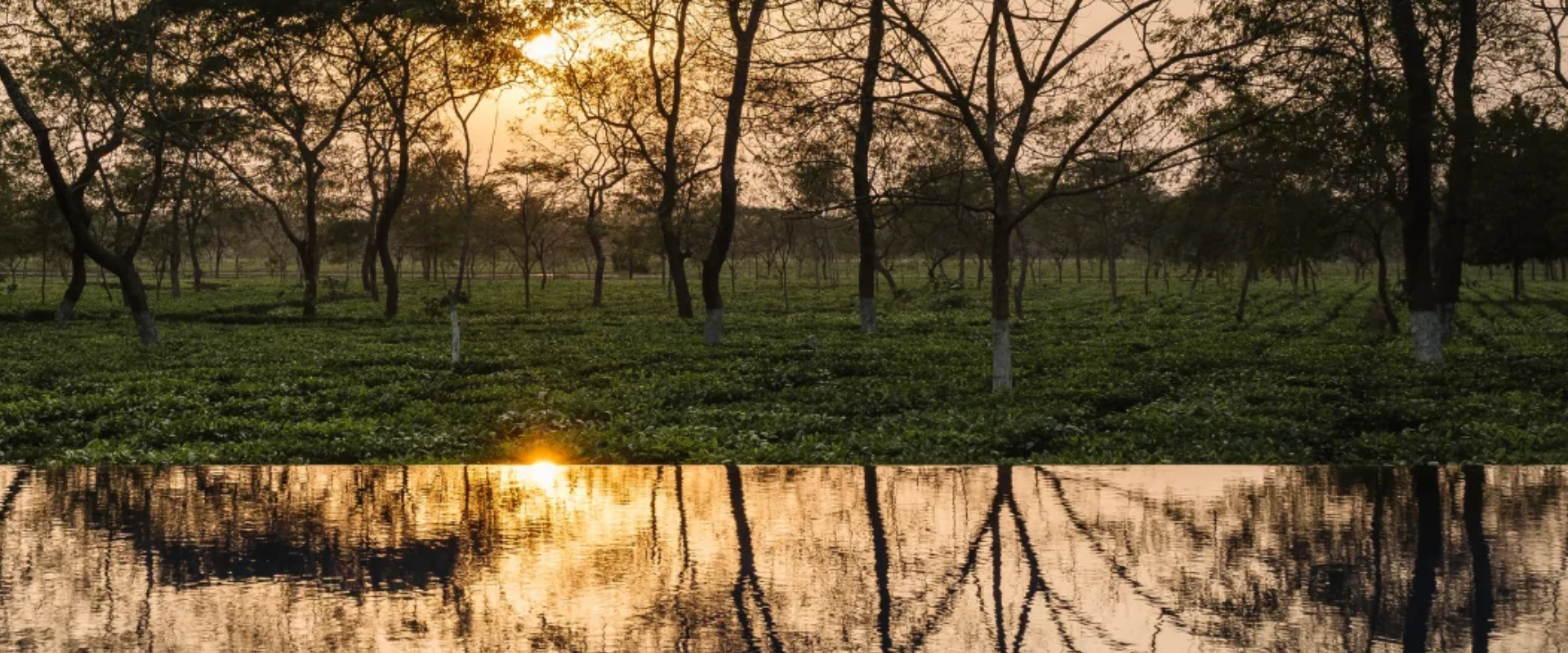
The Postcard in the Durrung Tea Estate occupies 1,400 acres of working tea plantations in Tezpur, Assam. Twelve rooms are spread across the Planters' Bungalow and Luxury Chalets. The estate dates to 1864.
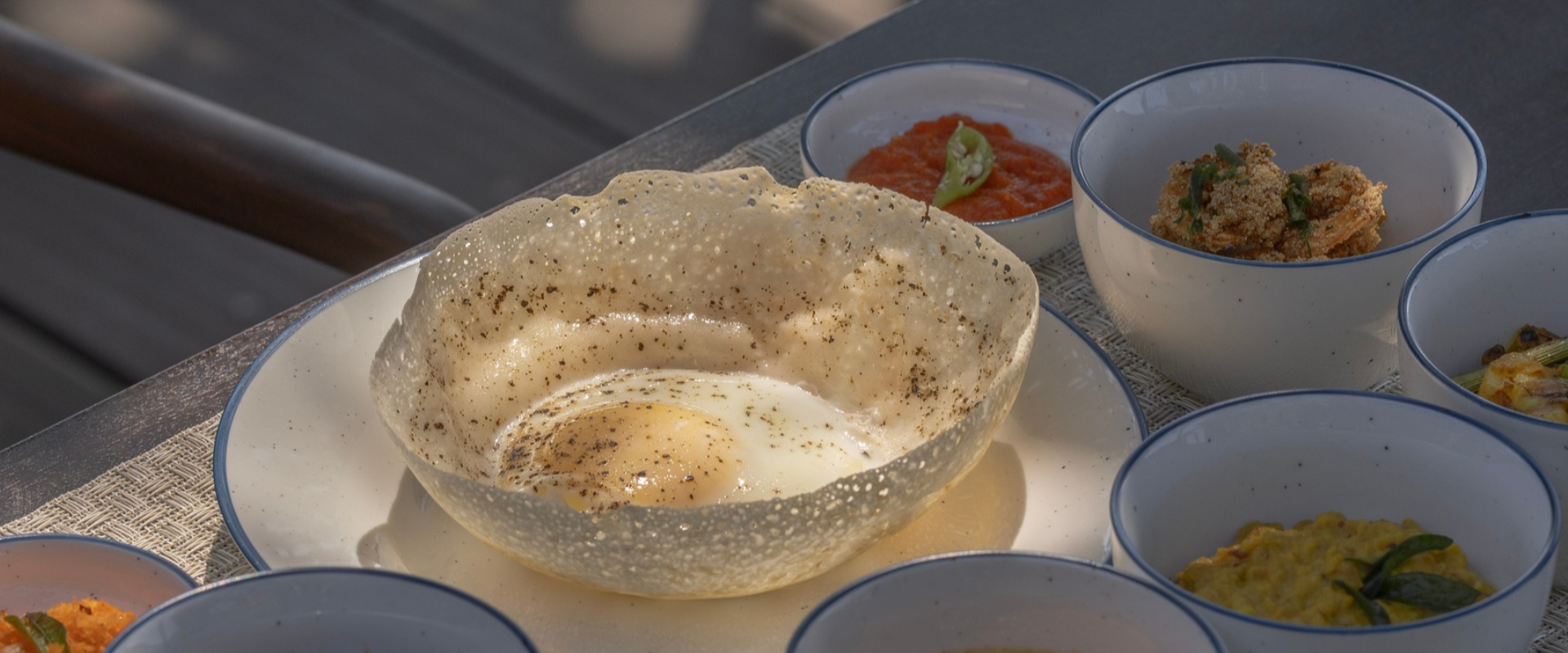
The kitchen serves Assamese dishes including fish tanga and bamboo shoot curry. Fish tanga is a sour fish preparation central to Assamese home cooking. Bamboo shoot curry reflects the use of foraged and fermented ingredients that distinguish Assamese cuisine from the cooking of other Indian regions.
Assam's food is characterised by minimal oil and spice, a reliance on rice, freshwater fish and indigenous greens. A hotel in Assam that serves these dishes is reflecting the actual food culture of the state. A hotel in Assam that serves butter chicken and naan is not.
HOW A GUEST CAN JUDGE A HOTEL'S KITCHEN
A guest does not need to be a food expert to assess whether a hotel's kitchen reflects its region. A few practical observations are enough.
Look at the menu for named regional dishes. Not "local fish curry" but a specific preparation with a name, such as ghee roast or fish tanga. Named dishes suggest the kitchen has studied the region's cooking rather than approximating it.
Ask which communities the cooking comes from. A hotel that can answer this question, that can say "this is a Bunt dish" or "this is an Assamese preparation", has done the work of learning the food traditions around it.
Ask what is in season. A kitchen connected to its region will know what is available locally at that time of year. A kitchen running a fixed menu may not.
Notice whether breakfast reflects the region. Many luxury hotels default to a continental breakfast regardless of location. A hotel that offers regional breakfast dishes alongside familiar options is extending its commitment to the destination into the first meal of the day.
These are not tests. They are observations any guest can make, and they reveal whether a hotel's claim of authenticity extends to the plate.
Regional cuisine is one of the clearest ways a luxury hotel can show it has learned its own place. It is specific, verifiable and rooted in communities that exist beyond the hotel's walls. The Postcard Hotel builds each property's kitchen around the cooking traditions of its region, so that the food at The Postcard on the Arabian Sea belongs to coastal Karnataka and the food at The Postcard in the Durrung Tea Estate belongs to Assam. Stay at The Postcard on the Arabian Sea or The Postcard in the Durrung Tea Estate, explore The Postcard Hotel collection, or book your escape.