A hotel menu can tell you more about a place than any guidebook, if the kitchen has bothered to learn from the place at all. Across India, some hotels serve food that could belong to any city on any continent. Others cook dishes that exist only in that district, learnt from the families who have cooked them for generations. The difference shapes an entire stay, and it is possible to spot it before booking.
To choose a hotel in India for its regional cuisine, look for specific, checkable signs: menus that name the community and tradition behind each dish, recipes learnt from local home cooksrather than imported from a central kitchen, ingredients grown on site or sourced nearby, and food that changes with the season. Ask the hotel directly about each of these before confirming a reservation.
THE MENU NAMES THE REGION'S OWN DISHES AND COMMUNITIES
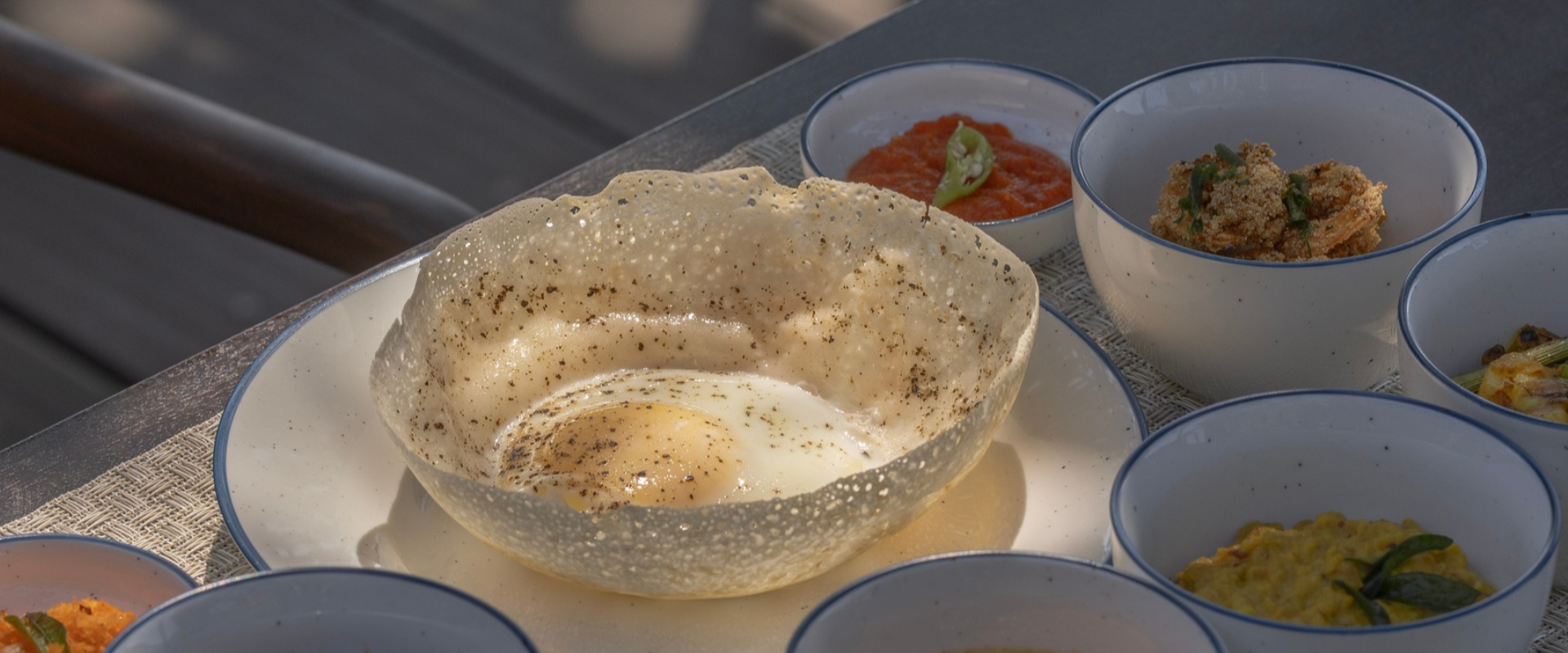
The first thing to check is whether a hotel's menu tells you where you are. A menu in coastal Karnataka that lists "Indian curry" communicates nothing about the place. One that lists ghee roast from the Bunt cooking tradition, or a Goud Saraswat fish preparation, tells you the kitchen knows whose food it is serving and is willing to say so.
This specificity matters because regional Indian cooking is not one tradition. It is hundreds, shaped by community, geography, religion and trade. A hotel that names these traditions on its menu has done the work of learning them.
The Postcard on the Arabian Sea, Maravanthe, Karnataka, for instance, serves coastal Bunt, Goud Saraswat, Catholic and Konkani Muslim cooking. Each tradition appears distinctly, not blended into a single unnamed style. That level of detail is something a traveller can verify on a hotel's website or by writing to the reservations team before booking.
RECIPES LEARNT FROM LOCAL HOME COOKS
Where a recipe comes from matters as much as what it contains. Hotel kitchens that develop dishes internally, or import them from a flagship property elsewhere, produce competent food that could be served anywhere. Kitchens that learn from local home cooks produce food that belongs to the place.
This is a practical distinction, not a sentimental one. Home cooks in a region carry techniques, spice ratios and ingredient preferences that professional training does not always teach. A ghee roast learnt from home cooks in coastal Karnataka will differ from one developed by a kitchen team working from a published recipe.
The Postcard on the Arabian Sea, Maravanthe, Karnataka, serves ghee roast learnt from local home cooks. The Postcard Saligao, North Goa, offers the paasai, a hosted afternoon tea in a local home, connecting guests directly to domestic cooking traditions. These are verifiable details. Ask a hotel whether its kitchen has learnt from local families. The answer, or the lack of one, is informative.
INGREDIENTS FROM THE HOTEL'S OWN GARDEN OR NEARBY SOURCES
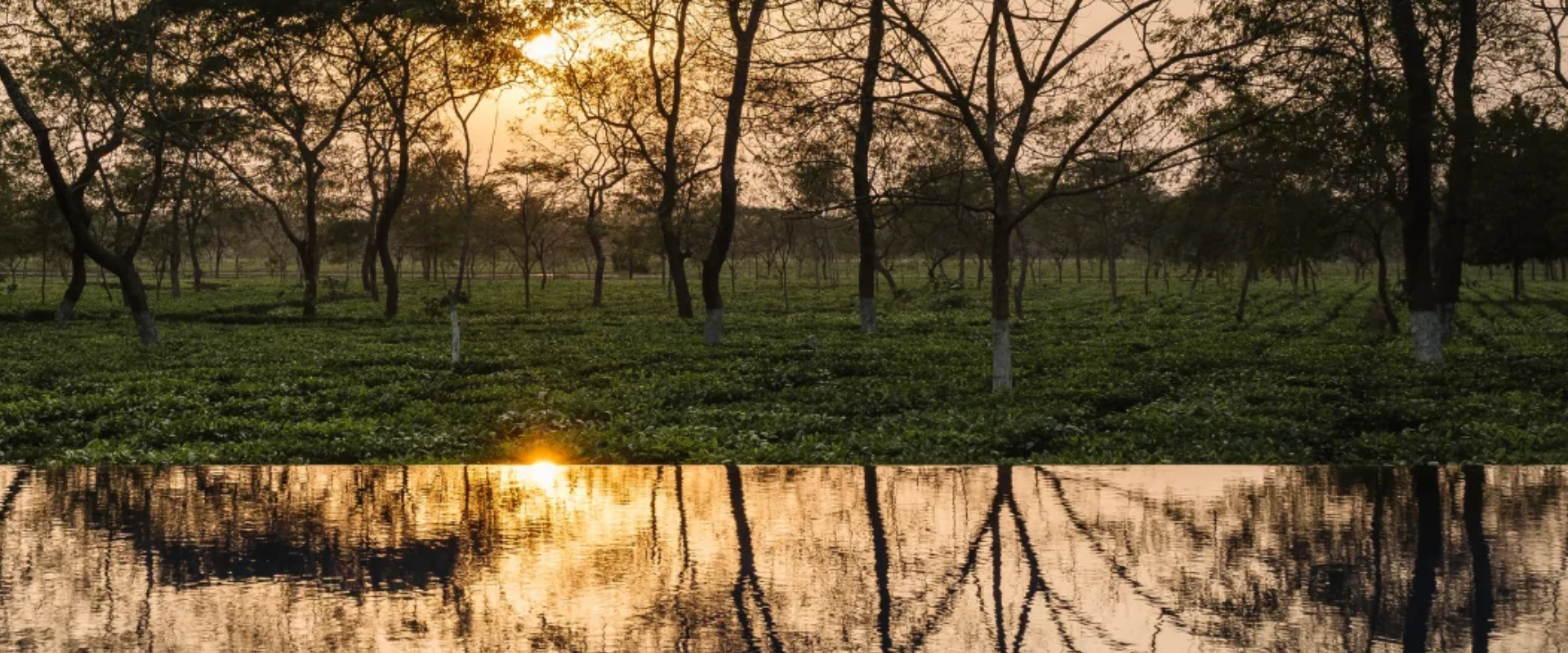
Regional cooking depends on regional ingredients. A kitchen cannot produce honest Gujarati food if its vegetables arrive frozen from a central warehouse hundreds of kilometres away. Hotels that grow their own produce or source from nearby farms and fisheries have a structural advantage in serving food that reflects the surrounding landscape.
The Postcard Gir Wildlife Sanctuary, Gujarat, maintains an organic garden and serves Gujarati and Parsi cooking. When pomfret is available from Veraval, it appears on the menu. When it is not, it does not. That responsiveness to supply is itself a sign of integrity.
Before booking, ask a hotel whether it grows any of its own ingredients and where it sources key produce. A hotel that can name its suppliers or describe its garden is one that takes sourcing seriously.
FOOD THAT CHANGES WITH SEASON AND AVAILABILITY
A menu that never changes is a menu disconnected from its surroundings. Seasonal cooking is not a marketing concept; it is the natural result of using local ingredients. Coastal fish have seasons. Vegetables have seasons. Fruits, herbs and even dairy vary through the year.
Hotels committed to regional food reflect these rhythms. The menu in monsoon differs from the menu in winter, not because of a planned refresh, but because the ingredients have changed. This is how home kitchens across India have always worked.
When reviewing a hotel's dining information, look for language that acknowledges seasonality. Phrases like "subject to availability" or "seasonal menu" suggest a kitchen that responds to what is fresh and local rather than importing consistency.
FREEDOM IN WHEN AND WHERE TO EAT
A hotel's attitude to meal times reveals something about its attitude to food. Rigid breakfast windows, fixed dinner seatings and limited in room options suggest a kitchen organised around operational convenience rather than the guest's experience of a place.
Hotels that offer flexibility, particularly anytime breakfast with no cut off, treat food as part of an unhurried stay rather than a scheduled event. Across The Postcard Hotel collection, anytime breakfast has no cut off. In room dining and extras vary by hotel and may cost extra.
This flexibility matters for travellers whose days are shaped by early morning wildlife drives, late arrivals after long journeys, or simply the desire to eat when hungry rather than when told to. Ask a hotel whether breakfast has a fixed window or whether it is available throughout the day.
QUESTIONS TO ASK A HOTEL BEFORE BOOKING
The signs above translate into direct questions any traveller can put to a hotel's reservations team. Specific answers indicate genuine commitment. Vague or evasive ones suggest the kitchen has not done the work.
- Which regional dishes and cooking traditions does the menu feature?
- Were any recipes learnt from local home cooks or families?
- Does the hotel grow its own produce or source ingredients locally?
- Does the menu change with season and local availability?
- Is breakfast available at any time, or is there a fixed window?
- Can guests experience local food traditions outside the hotel, such as a meal in a local home?
A hotel that answers these questions with names, places and specifics is one where regional cuisine is a genuine priority, not a line in a brochure.
Choosing a hotel for its food is not about finding the most elaborate menu or the most decorated kitchen. It is about finding a place where the cooking is connected to the land, the community and the season. The details are checkable, the questions are simple, and the difference, once experienced, reshapes what a stay in India can be.
Stay at The Postcard on the Arabian Sea, Maravanthe, Karnataka, The Postcard Gir Wildlife Sanctuary, Gujarat, or The Postcard Saligao, North Goa, explore The Postcard Hotel collection, or book your escape.